01 / Context
Overview
The project develops semantic-segmentation models for tomato, capsicum, and chili plants in natural farm environments. A self-developed dataset of 1,085 images was collected and manually labeled, creating a challenging problem because the crops often share similar colors with surrounding vegetation and are partially occluded.
U-Net, SegNet, and FCN-based architectures were compared. Dataset imbalance, data augmentation, class-specific training, model size, and generalization to images outside the test set were all examined rather than treating segmentation accuracy as a single-number problem.
Project work
- Collected and labeled farm images for three crop classes using MATLAB Image Labeler.
- Prepared training/validation/testing splits and examined the effects of class imbalance.
- Compared U-Net, SegNet, and FCN-family architectures using IoU, precision, recall, and F1 score.
02 / Approach
Methods & diagrams
Dataset Development
Tomato, capsicum, and chili images were collected under varying angle, distance, magnification, and lighting conditions and manually segmented.
Segmentation Networks
Encoder-decoder models including U-Net and SegNet were compared with FCN-based segmentation.
Evaluation
IoU, precision, recall, F1 score, class imbalance, and generalization to external images were analyzed.
03 / Evidence
Results & gallery
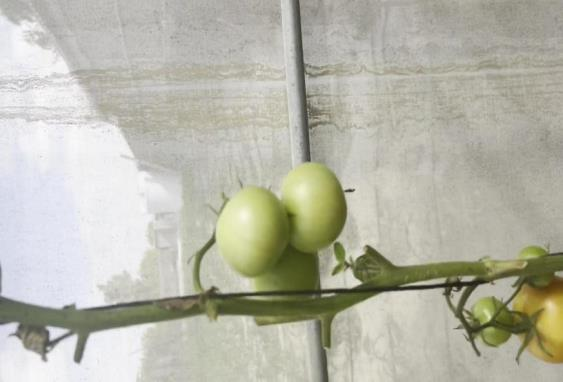
Project figures and laboratory photographs. Open a figure to inspect the detail; vector PDFs are available for the control diagrams.
Findings
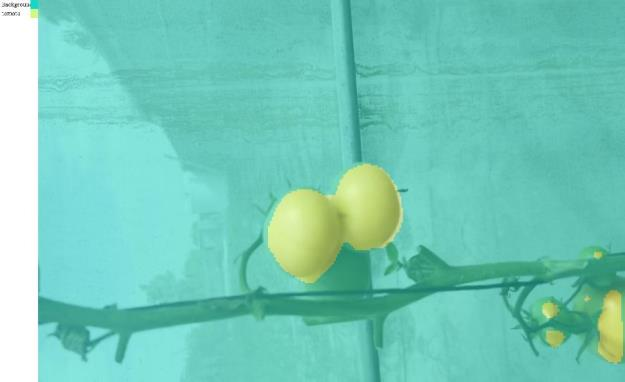
- The experiments examine per-class training, class imbalance, and multiple segmentation architectures.
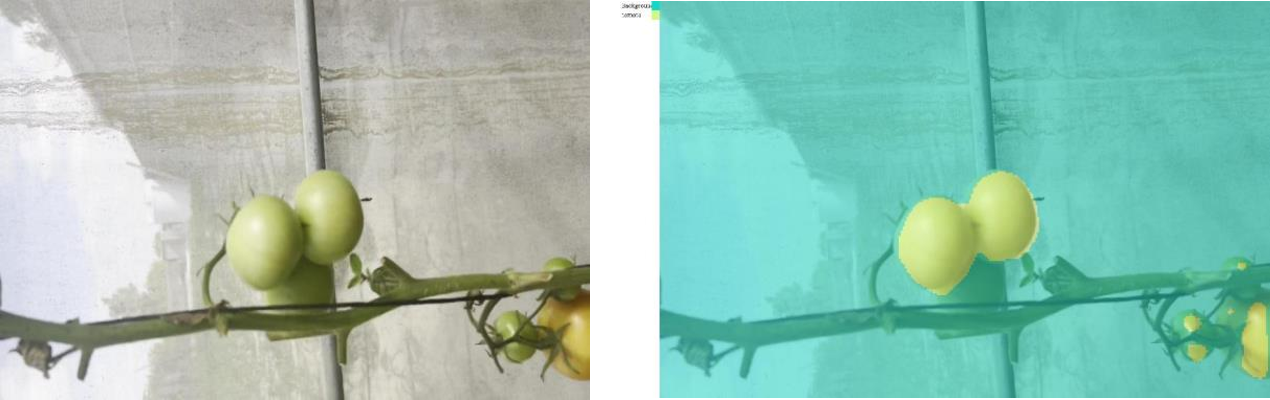
- The report shows test images alongside predicted segmentation overlays.
Scope & limitations
This collaborative academic study uses a limited, imbalanced dataset. Its task is pixel-level crop segmentation; contributors, data preparation, and evaluation are described in the original report.