01 / Context
Overview
My M.Sc. thesis at Khalifa University was titled "Fault Diagnosis of Multiphase Electrical Drives Using Machine Learning." The work brought together machine modeling, drive control, experimental hardware, and data-driven diagnosis.
The CV records a rotor-field-oriented five-phase induction-machine simulation in MATLAB/Simulink and the development of a 1.4 kW experimental drive prototype. Machine-learning algorithms were applied to detect and localize open-switch and open-phase faults.
This thesis provides the background to the later research-associate work on fault diagnosis and multiphase-drive control. The separate project records preserve that distinction rather than combining every later result into the thesis.
Thesis work
- Modeled a rotor-field-oriented five-phase induction-machine drive in MATLAB/Simulink.
- Developed a 1.4 kW experimental five-phase induction-drive prototype.
- Applied machine-learning algorithms to the detection and localization of open-switch and open-phase faults.
02 / Approach
Methods & diagrams
Machine model and rotor field-oriented control
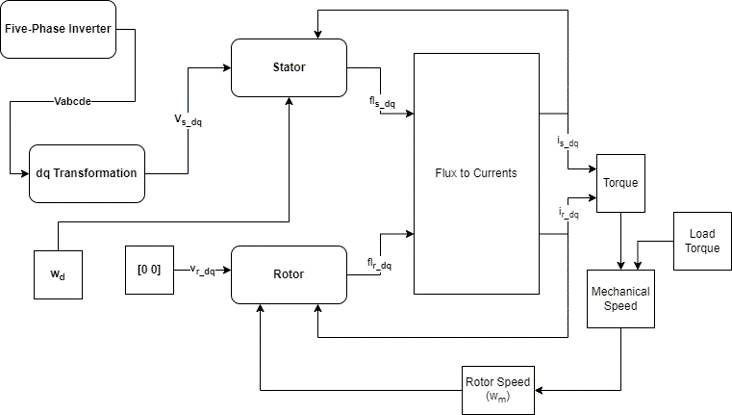
The modeled drive links the machine dynamics to the current, flux, and speed-control structure. This establishes the operating signals needed for a diagnosis study.
Experimental drive platform
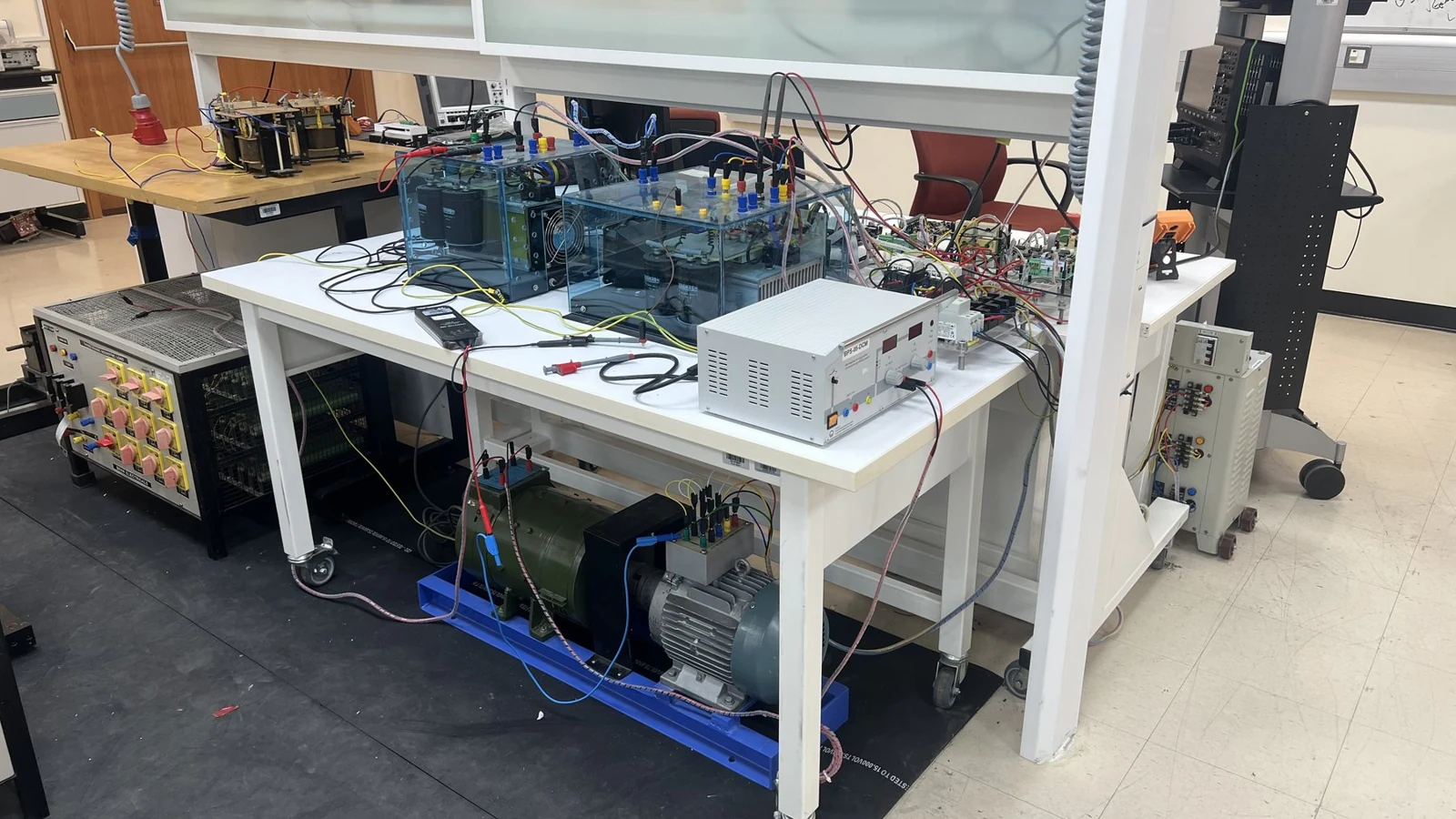
The experimental platform connects the machine, converter, controller, load, and measurement hardware. The project portfolio provides a visual record of the laboratory setup.
Machine-learning fault diagnosis
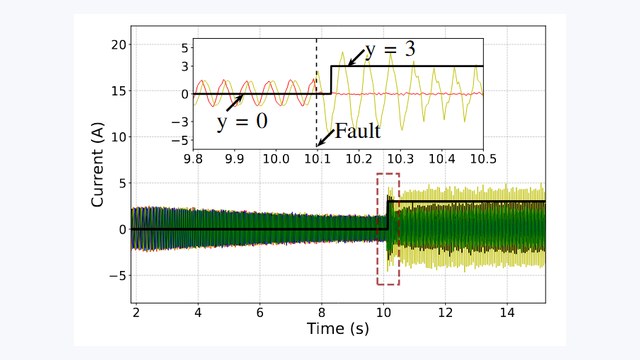
The diagnosis task is to distinguish normal operation from open-switch and open-phase fault cases, then localize the fault. The thesis title and CV describe this scope without establishing a universal detection accuracy.
Findings
- The thesis connected numerical machine modeling with an experimental drive platform and a diagnosis task.
- The work formed a basis for the subsequent multiphase-drive fault-diagnosis and control projects.
Scope & limitations
This overview is based on the thesis summary in the CV and the laboratory portfolio. The full thesis manuscript is not included here. The archive date is the recorded degree-completion date.