01 / Context
Overview
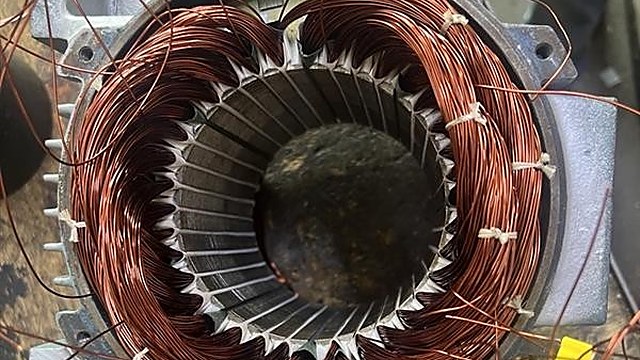
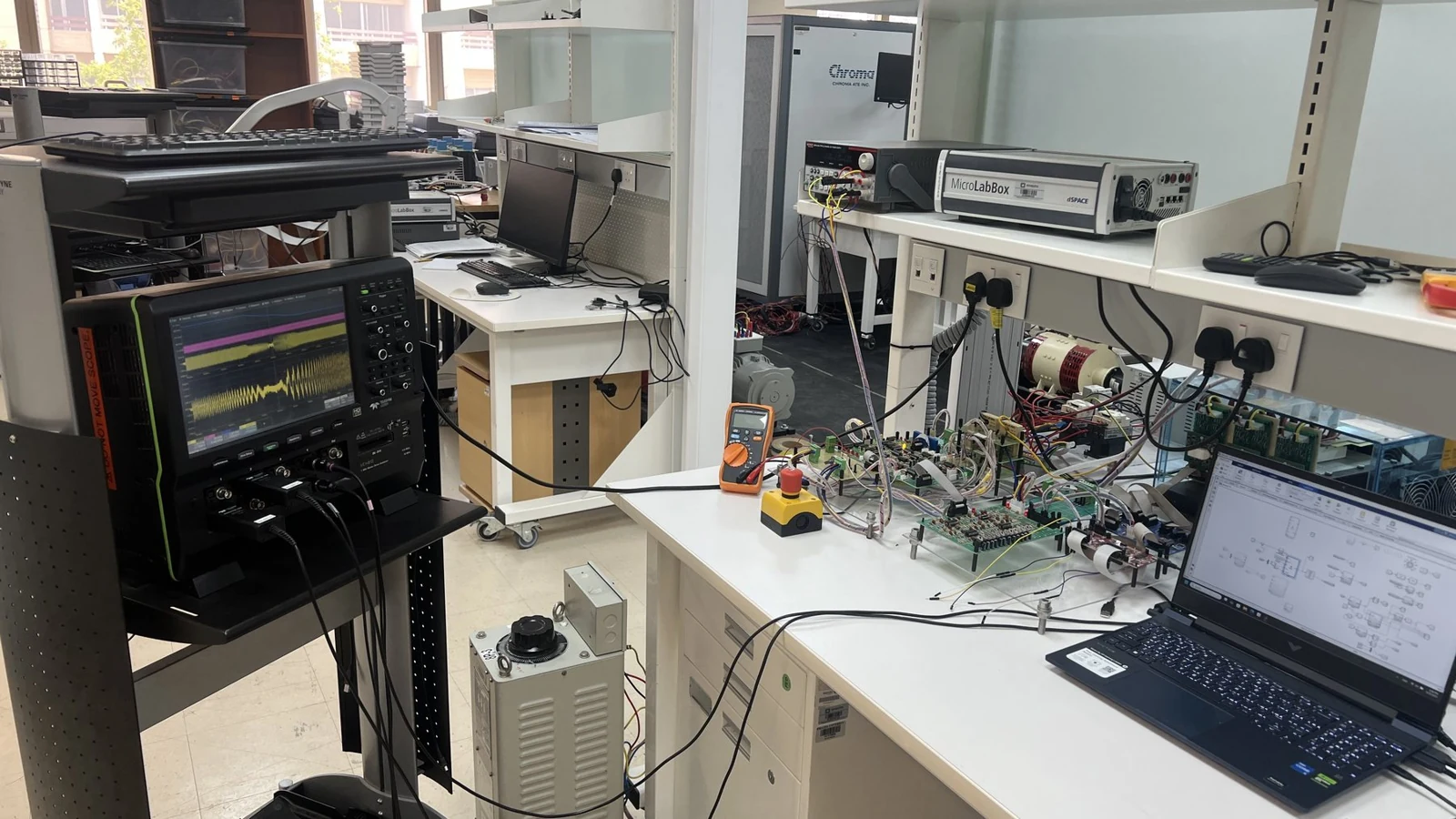
This project brought together machine modeling, nonlinear control, embedded implementation, and experimental validation on a 1.4 kW five-phase induction-machine test bench. The objective was not to study a single controller in isolation, but to build a reusable platform on which conventional and advanced drive-control strategies could be compared under the same electrical and mechanical conditions.
The work progressed from rotor field-oriented control (RFOC) to direct torque control (DTC) and model-predictive flux control (MPFC). The later stages focused on exploiting the additional degrees of freedom of the five-phase machine to suppress harmonic-producing x-y currents, reduce common-mode voltage, and achieve high dynamic performance without relying on the virtual-vector assumptions commonly used in multiphase predictive control.
My work
- Implemented RFOC, sensorless DTC, and predictive flux control in MATLAB/Simulink and on TI C2000 hardware.
- Developed an improved DTC strategy with variable duty-ratio action for harmonic suppression and reduced common-mode voltage.
- Developed a model-predictive flux-control formulation that directly handles the multiphase subspace without virtual vectors.
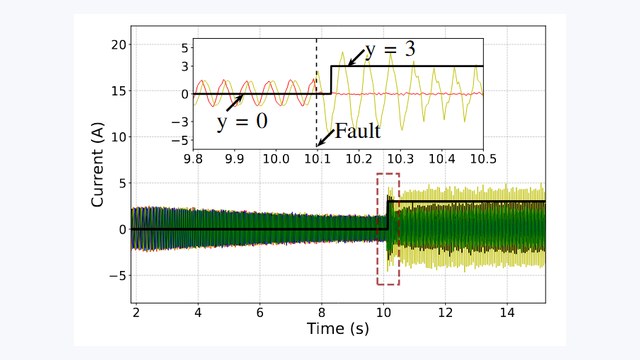
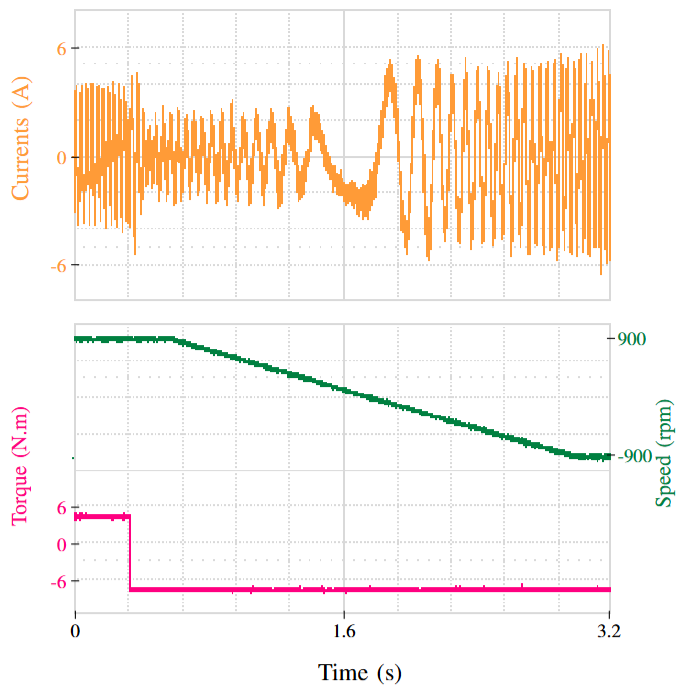
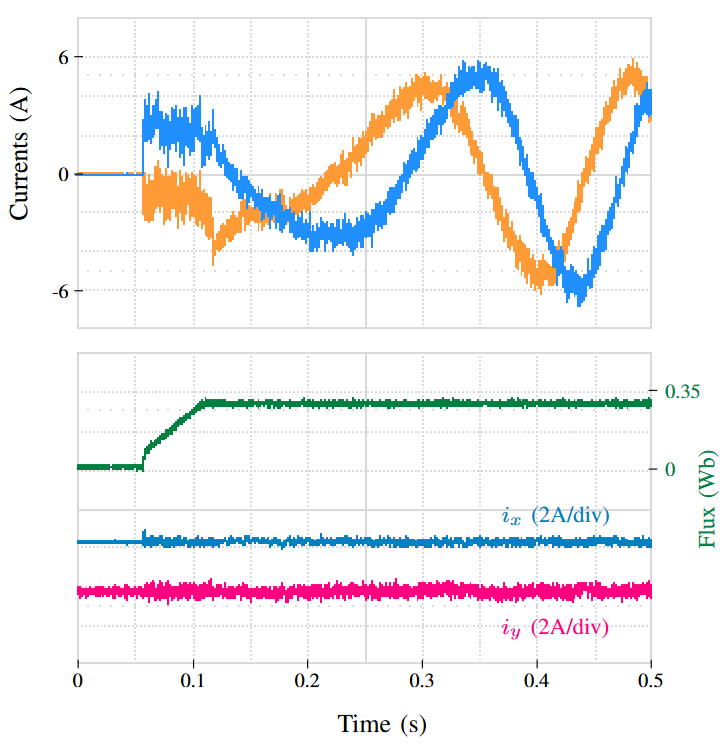
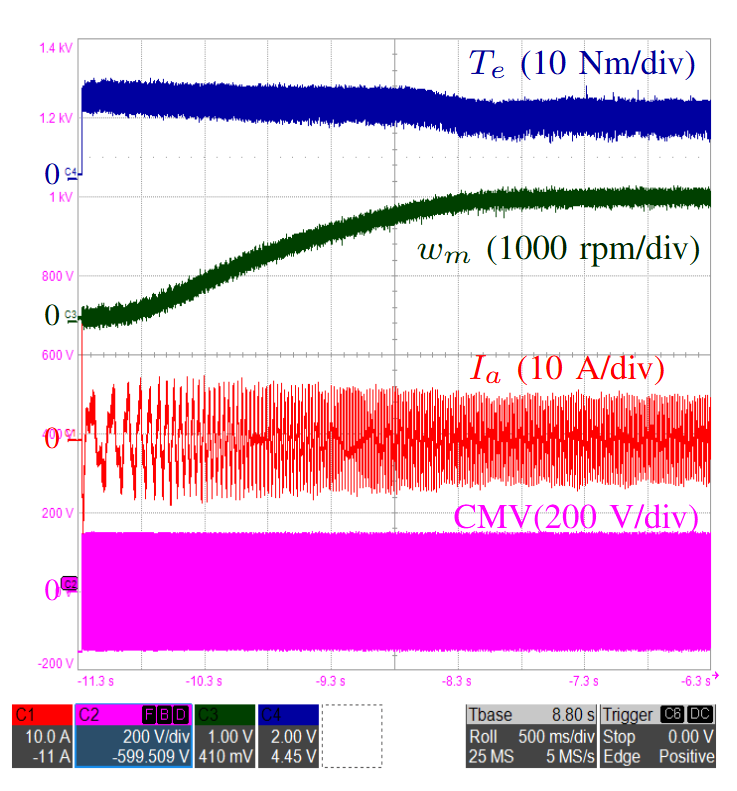
- Validated controller behavior experimentally using startup, speed-reversal, torque/flux tracking, and fault-related operating tests.
02 / Approach
Methods & diagrams
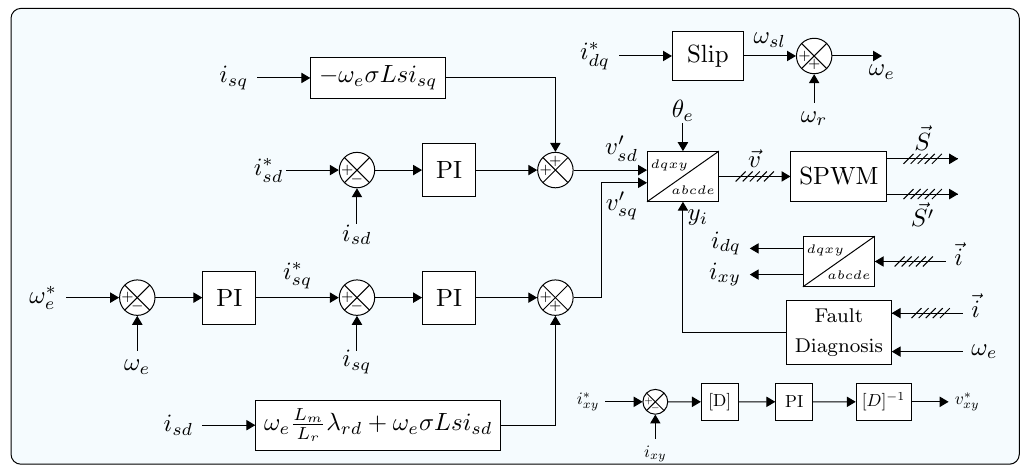
Rotor Field-Oriented Control (RFOC)
A decoupled current-control structure regulates flux- and torque-producing current components. The implementation includes reference-frame transformations, speed/slip calculation, PWM generation, and a fault-diagnosis path.
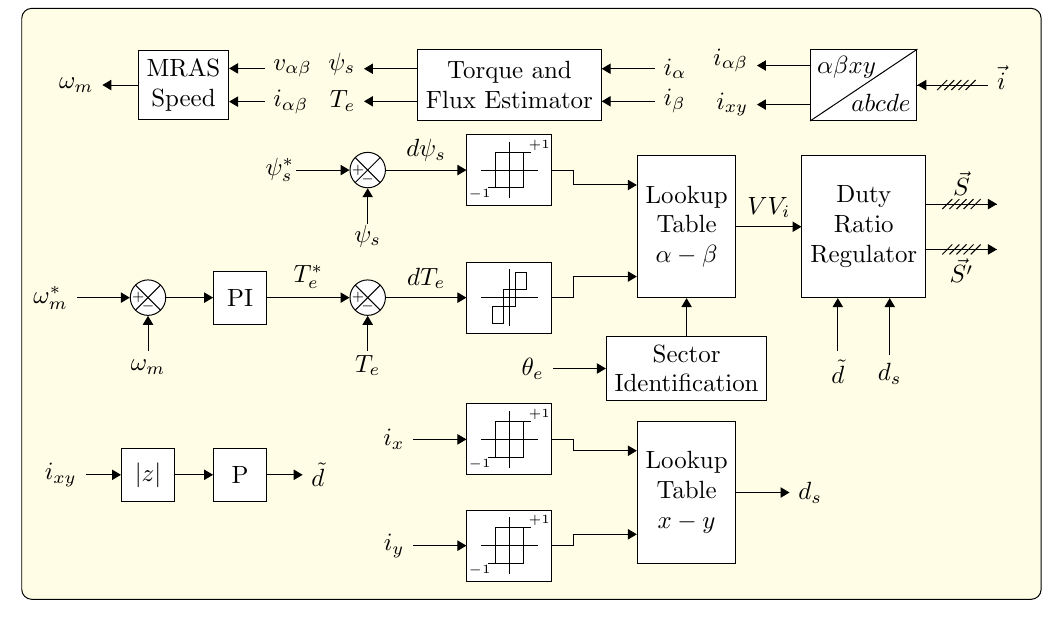
Direct Torque Control (DTC)
Sensorless DTC estimates torque and stator flux directly, uses hysteresis decisions and sector identification, and applies switching/duty-ratio logic. The developed version also acts on the x-y subspace to suppress harmonic currents.
Model Predictive Flux Control (MPFC)
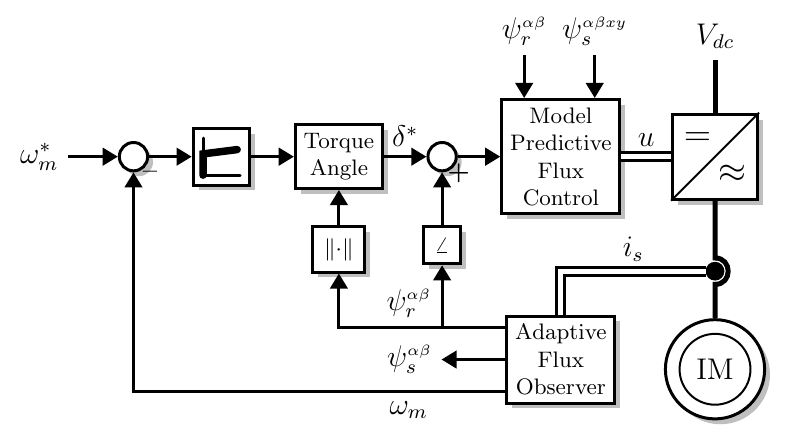
The predictive controller uses estimated stator/rotor flux and a torque-angle reference to select the converter action directly. The formulation was developed to avoid the conventional dependence on virtual vectors.
03 / Evidence
Results & gallery
Project figures and laboratory photographs. Open a figure to inspect the detail; vector PDFs are available for the control diagrams.
Findings
- The same physical platform supported classical vector control, direct torque control, and predictive control, enabling meaningful controller-to-controller comparison.
- The multiphase x-y subspace can be actively controlled rather than merely neglected, providing a route to lower current distortion and improved switching behavior.
- Experimental validation linked the mathematical controller designs to practical sensing, switching, embedded implementation, and machine behavior.
Scope & limitations
The experimental traces document their respective controller and operating condition. They should be read alongside the corresponding control diagram rather than as a common numerical benchmark across all three methods.