01 / Context
Overview
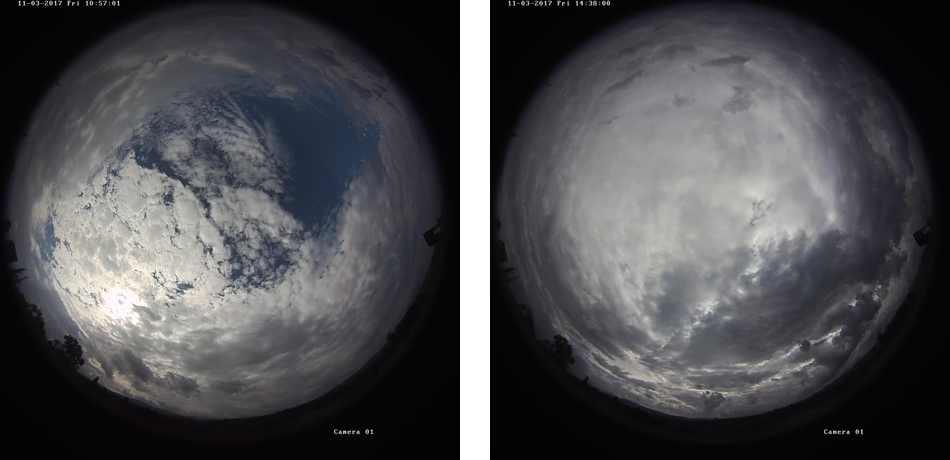
This project investigates whether ground-based sky images can provide enough information about cloud cover and sun position to estimate short-term PV output. Frames from a 360° fisheye camera were time-aligned with one-minute PV-generation measurements, filtered for valid observations, and downsampled for neural-network training.
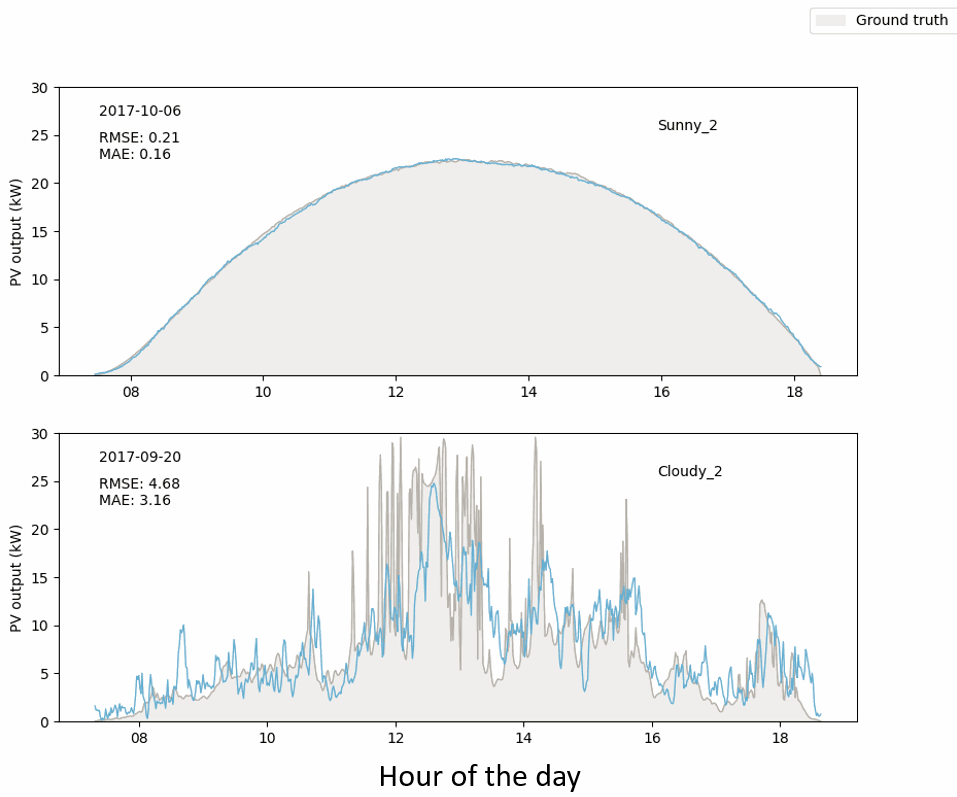
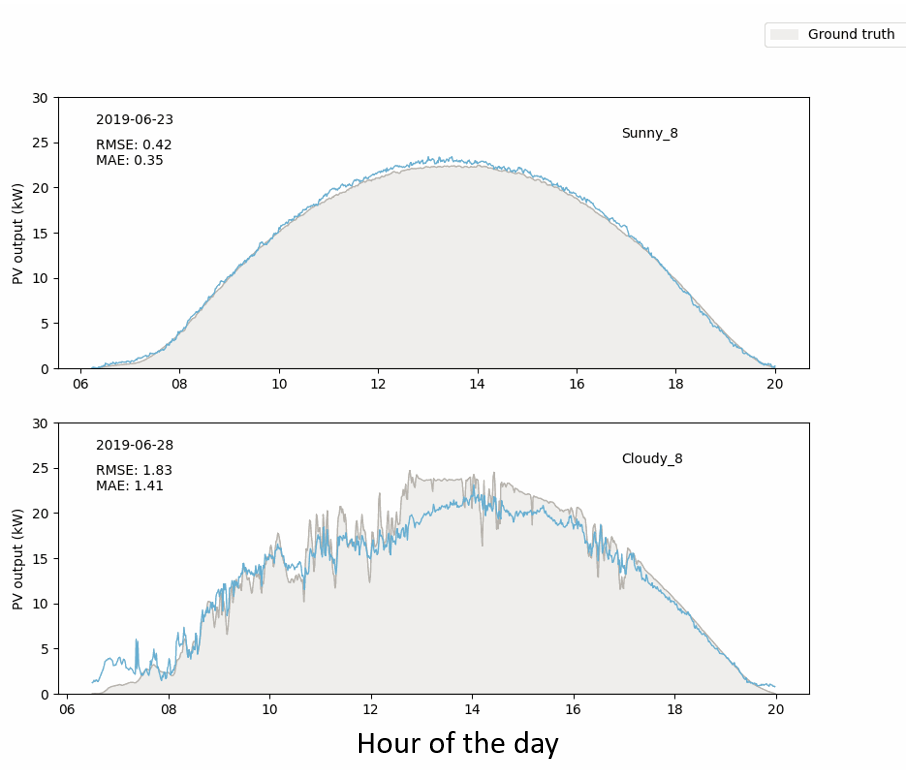
The final matched dataset contained hundreds of thousands of image-power observations. VGG16 trained end-to-end, VGG16 transfer learning, ResNet, and a custom CNN were compared using sunny- and cloudy-day RMSE/MAE, exposing the much greater difficulty of rapidly changing cloud conditions.
My work
- Matched sky images and PV measurements by timestamp and filtered unreliable observations.
- Implemented end-to-end and transfer-learning CNN regressors.
- Compared model behavior separately for clear and cloudy conditions.
02 / Approach
Methods & diagrams
Image–Power Dataset
Fisheye images were synchronized to one-minute PV output data and resized for tractable CNN training.
CNN Architectures
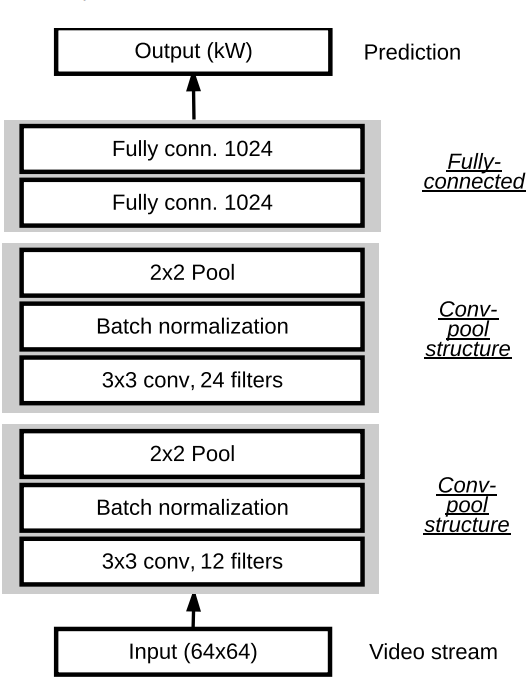
VGG16, ImageNet transfer learning, ResNet, and a custom convolutional network were trained as regression models.
Weather-Aware Evaluation
Error was examined on sunny and cloudy days to reveal where image-based forecasting remains difficult.
03 / Evidence
Results & gallery
Project figures and laboratory photographs. Open a figure to inspect the detail; vector PDFs are available for the control diagrams.
Findings
- End-to-end VGG16 produced the strongest results on sunny conditions in the reported experiments.
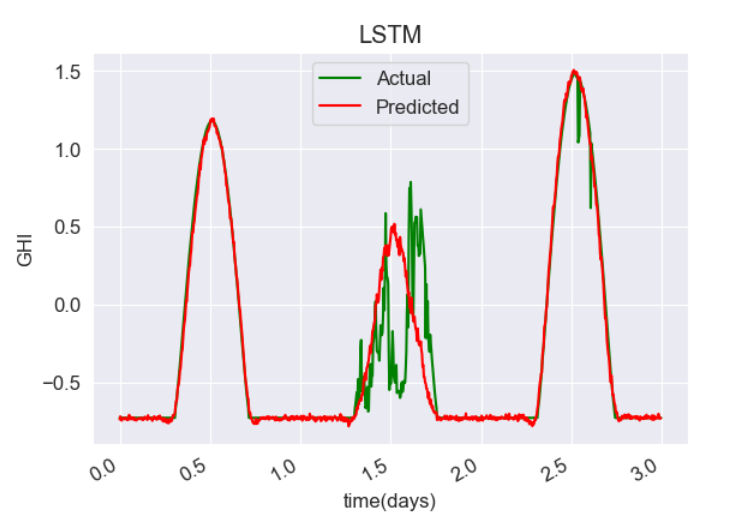
- Cloudy days remained substantially harder because rapid cloud motion produces highly irregular PV-output changes.
- The work motivated sequence-based image forecasting rather than single-frame regression as a natural next step.
Scope & limitations
The study estimates contemporaneous PV output from paired sky images. Sequence-based forecasting of future output remains an extension discussed in the report.